

Fundamental Attribution Error
Luck, timing, technological advancements and other things outside of my control.

Before I sold KyleBrush in 2017, I heard a lot of guest speakers at various creative conferences talk about their successful careers. Many of these talks blend together but I remember often coming away with the feeling that the primary message being delivered was this: “If I can do it, you can do it.”
It’s a nice thought and it gives people hope (myself, included, at the time), but it’s just not true. I have written a little about why the my-path-could-be-your-path message is misleading (see this previous article). I want to write a little more about this today.
Here are just some of the things that were outside of my control, between 2013 and 2017, leading up to the sale of my business:
The internet didn’t just exist, but millions of people were already connected and buying things online. The necessary environment for a business like mine to succeed had been created and I had nothing to do with it.
Thanks to Sahil Lavingia, Gumroad launched in 2011 and had been developed enough by 2013 to enable me to very easily sell digital products worldwide, maintain a customer mailing list, and pay almost no overhead.
Hardware and software for digital drawing had come far enough by 2013 to allow my custom brushes to not only exist, but to perform with minimal (or no) lag and give artists a great experience.
Animation and gaming studios had mostly adopted completely digital workflows and artists working in these studios needed premium brushes and tools.
Social media platforms (particularly Twitter and Tumblr) were not yet awful and people really did support each other and promote friends’ creative projects and products (like, a LOT), thus enabling rapid organic growth for my brand.
The economy in The United States was steadily recovering from the Great Recession and growth was good in the years I was building the KyleBrush business. Jobs in illustration and animation were growing during this time. Pros, students, and hobbyists in the digital art space were not opposed to spending a few dollars on custom brushes to enhance their digital art experience.
Digital brushes were simply files that could be exported and imported into drawing apps without friction. Anybody could (and can) make and sell brushes and they would just work — I didn’t need any special coding skills or have to work directly on a software team to make it possible for my brushes to exist in Photoshop, Procreate, or Sketchbook. How lucky was that?
There are other factors, of course, but I will stop here. I understand the impulse to gloss over luck and timing when describing one’s path to success and glory, especially on a main stage at a creativity conference; it’s true that a lot of hard work, invention and creativity goes into building a business that succeeds. And that stuff is interesting, for sure. But none of it amounts to a hill of beans if the economic conditions are wrong, the customer isn’t quite ready to embrace the product, or a global pandemic suddenly hits.
All this is to say, simply, that I love writing about my story and sharing everything I learned along the way with you, dear readers. But I never want to give you the impression that the specific journey I stumbled through is a formula for achieving whatever goals you may have. I think I made some good decisions based on the conditions and trends I observed and I’m happy about those choices, but the only real pride I feel, deep down, comes from knowing I spent a lot of hours developing a set of skills. At the end of the day, that’s all I can take credit for.
Thanks for reading, and if you have some thoughts of your own to share, leave a comment below. Here is a recent drawing I left behind at a restaurant — it’s something I started doing last year and I am really enjoying keeping up the habit. I’ll write about it next time.
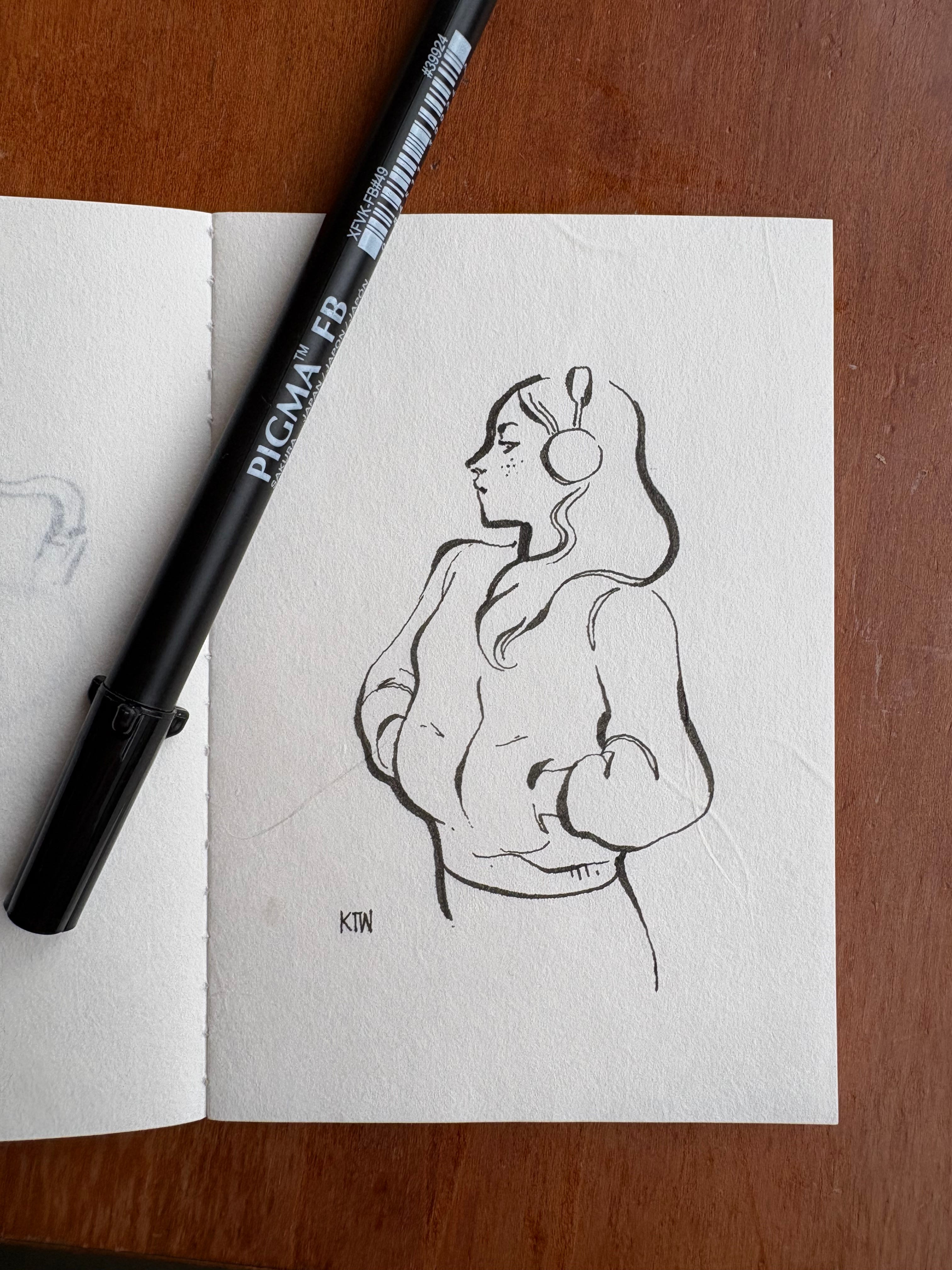
Take care of yourselves and each other, remember to be kind, and I’ll say, Ciao for now.
— Kyle
Instagram / Website / Shop / My Wife’s Book / Meditative Drawing
All it takes is hard work and luck. I only have control over one of those, so that's all I try to focus on.
Great post, Kyle. Man, reading it reminds me of the time when people really supported each other on social media. I'd love for it to get back to that! Remember Follow Friday on Twitter?
Starting out in illustration I tried to copy the way a lot of illustrators were promoting themselves, but it really works differently for everyone.